This Mail-Order Bride Saves Ranch begins on a bitter Wyoming dawn when Caleb Mercer wakes to the impossible scent of cinnamon drifting from his kitchen.
Table of Contents
Part 1: Mail-Order Bride Saves Ranch Unfolds
The bunkhouse usually reeks of burnt coffee, wet wool, and salt pork tough enough to patch a saddle.
His kitchen is worse, a cracked window rattling above gray dishwater and a stove that smokes whenever the north wind presses the chimney.
Adeline opens the oven and warm air rolls through the doorway carrying apples, butter, and the dangerous idea that tomorrow might be worth planning for.
She stands in a plain blue dress with flour on one sleeve, setting down a pan of biscuits and checking the stew as though the men had not spent two weeks joking she would run back East before the first snow.
Eli Boone, the oldest hand, tears a biscuit open and steam rises between his fingers.
He takes one bite, stops chewing, then moves his tin cup aside to make room for another.
Nobody laughs after that, the men eating slowly at first then scraping bowls clean.
Chairs shift closer and someone asks whether there is more stew.
Adeline points toward the pot without looking up from the apples she is slicing.
Caleb watches from the doorway, expecting tears when she sees the unpaid notes, thin cattle, and empty feed bins.
Instead she asks which flour sack is least spoiled, her practical mind already turning scarcity into strategy.
That afternoon she finds a handbill beside the mercantile door advertising a railroad grading camp ten miles east with three hundred men.
The company has been buying land faster than small ranchers can read the contracts, and Caleb has stopped arguing because men with empty pockets rarely choose what progress looks like.
Adeline folds the handbill into her apron and declares she will take food to the camp.
Caleb protests that she is not taking a wagon out there, but she replies she was not asking permission.
He warns the road is bad; she counters that the food is worse.
He says the men will not pay a stranger for stew; she presses her thumb into dough and says then they will bring it home.
Before dawn she loads stew, biscuits, and six apple pies into Caleb’s least‑broken wagon, Eli volunteering to drive until Caleb refuses and climbs onto the seat himself.
The grading camp appears through dust and hammer smoke, men standing beside dented cook pots eating beans the color of fence mud.
A foreman laughs when he sees Adeline, telling her the boys eat what they are given.
One worker smells the biscuits, asks the price, pays, takes a bite, and shouts that she used butter.
The line forms before she finishes uncovering the stew, and by noon every kettle is empty.
A young Irish laborer splits the final pie slice with his brother, a Chinese track worker returns Adeline’s spoon after wiping it clean with his handkerchief, and men who speak little English point at the wagon and hold up coins for tomorrow.
They return with twice the food, then three times, and within two weeks the cigar box under Adeline’s table holds enough money to pay the feed merchant.
Caleb carries the coins into town in a flour sack, the merchant counts them twice, then removes Caleb’s overdue notice from the window.
The cattle receive grain, the ranch hands stay through supper, and Adeline begins writing orders in a small black notebook tied with blue thread.
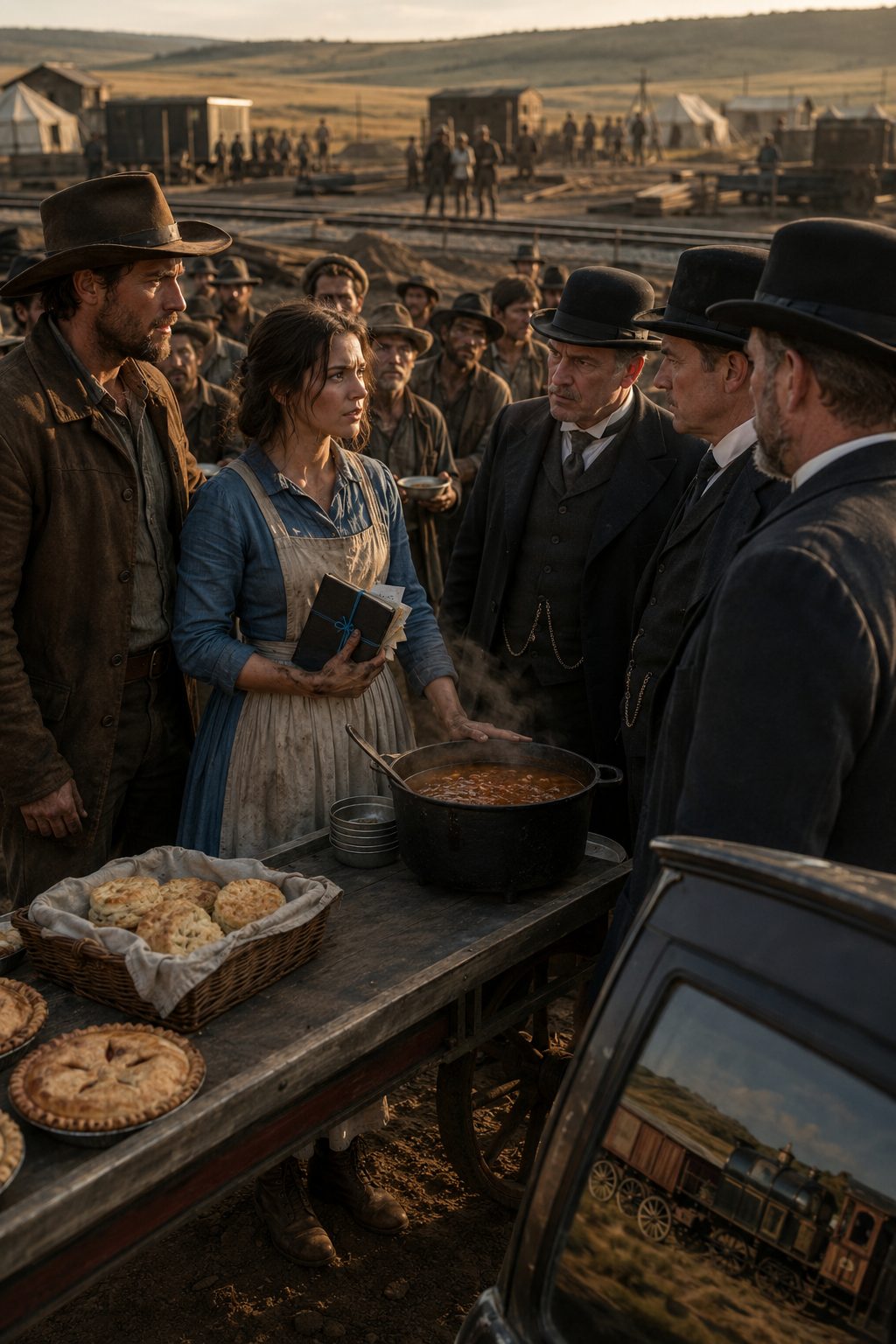
That notebook sits on the wagon when the railroad coach arrives, three men stepping down in dark coats untouched by dust.
The oldest introduces himself as Harlan Voss, regional purchasing agent, and he does not taste the stew.
He opens Adeline’s notebook without permission, declaring the company will take ownership Monday of the wagon, the recipes, and the camp contracts, offering her a place as kitchen staff.
The workers stop eating, Adeline lowers the ladle, and Voss smiles as though the agreement has already been signed.
He tells her she should understand how fortunate the offer is, but she wipes one drop of stew from the wagon rail, folds the cloth once, meets his stare, and says no.
Caleb wants her safe even if safety means surrendering what she has built, while Adeline believes surrender would teach the railroad it can own any hungry person’s work.
The question hangs: is protecting your family worth giving up the one thing that might protect them later?
Part 2: Mail-Order Bride Saves Ranch Triumphs
Harlan Voss looks at Adeline as though her answer has been a mistake in arithmetic.
She rests both hands on the wagon rail and repeats her refusal.
Voss glances toward Caleb and tells him to explain business to his wife.
Caleb’s boot shifts in the dust; two weeks earlier he might have tried, having spent years believing protection meant making every hard decision before anyone else could be hurt.
Now the railroad men stare at Adeline’s work as if Caleb owns it, and he simply says she gave her answer.
The younger official opens a leather case and removes a paper stamped with the railroad seal, stating the company controls trade inside the grading camp and Monday morning the wagon will be turned away.
Anyone buying from her will lose a day’s pay, and a murmur moves through the workers.
Voss leans closer, warning that accidents happen on bad roads, axles break, lanterns tip over, and ranches with debt should not invite more trouble.
Caleb steps forward, but Adeline catches his sleeve, knowing Voss wants Caleb angry enough to become the story.
She opens the black notebook; the first pages hold meal orders, then names and dates, each marked with who paid in advance.
Nearly two hundred workers have given her money for meals the railroad has not yet allowed her to serve.
She declares the wagon belongs to her husband, the recipes belonged to her mother, and the customers already hired her.
Voss reaches for the notebook, but Eli Boone steps between them holding an empty bowl and warns the bowl is slippery.
Nobody laughs, yet several men stand, and then the sound of wheels arrives.
Two black company carriages stop behind Voss’s coach; a broad man in a charcoal traveling coat steps down, followed by the county clerk and a woman carrying a newspaper satchel.
Voss straightens, addressing the newcomer as Mr. Whitcomb, surprised by his visit.
The newcomer removes his hat, saying he was not visiting Voss, and walks past him to Adeline’s wagon.
He introduces himself as Samuel Whitcomb, overseeing western operations for the railroad.
The camp goes still as Whitcomb opens the notebook to the blue thread, finding a letter Adeline wrote three days earlier.
The letter lists the workers’ prepaid orders, threats made by camp supervisors, and the company store’s inflated meal charges.
She had sent a copy through a passenger conductor whose sick child she fed during a storm delay, a gift nobody at the ranch had noticed.
A hot bowl of stew, wrapped biscuits for the road, and no charge had earned the conductor’s loyalty.
The conductor delivered her letter directly to Whitcomb, and Voss clears his throat, insisting the woman operates without company approval.
Whitcomb looks toward the cook tent where scorched beans sit beside salt pork covered in flies, then declares he approved competition this morning.
He hands the county clerk a second document: the railroad will lease Adeline a strip of ground beside the camp for one dollar a year, workers may buy meals wherever they choose, and any official threatening wages or access will be dismissed.
Voss stares at the paper, asking if Whitcomb believes her over his own regional agent.
Whitcomb points toward the notebook and says he believes two hundred receipts.
The newspaper woman begins writing, and by sunset Voss and his assistants have left in their coach.
Nobody throws a punch, nobody raises a gun; their defeat fits inside a ledger, a witness list, and one unpaid meal given to a tired father.
Adeline’s kitchen grows into a plank‑sided dining room beside the tracks; she hires two ranch wives, then the railroad cook Voss had blamed.
Caleb repairs the barn, buys winter feed, and pays the final note before the first heavy snow.
On the evening he burns that note, he finds Adeline making biscuit dough and says he thought she could not boil water.
She dusts flour from his cuff and replies he never asked.
Caleb watches the paper curl into ash, the ranch surviving because Adeline fed people before asking what they could do for her.
Whitcomb used his power to protect her, but only after her kindness reached someone important.
Some would call that justice working; others would say a system is broken when ordinary people need a powerful stranger to be treated fairly.
Discover more unforgettable stories and truth revelations on our main editorial page.