Part 1: The Unexpected Prank
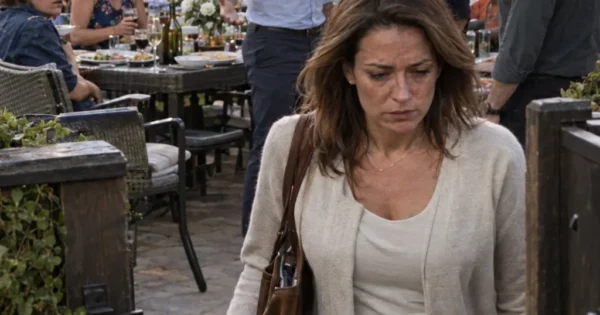
At 8:07 that morning, my sister broke the glasses I needed to defend five years of research. Then she smiled and said, «I guess you’ll have to fail.» For a few seconds, the kitchen went completely quiet. I was standing beside the sink, holding two pieces of my black frames in my hands. Without my glasses, the kitchen already looked soft around the edges. The cabinets blurred. Faces became little more than shapes. My mother kept spreading strawberry jam across her toast. My father kept scrolling through his phone. And Lila leaned against the counter in her silk robe like she had just pulled off a harmless joke. Mom opened a drawer and took out a roll of gray duct tape. «Fix them yourself,» she said. Dad finally looked at the clock. «They’ve already started without you.» I looked at him. It was 8:08. My doctoral defense had been scheduled for eight o’clock at the university. That was when I understood this wasn’t an accident. For months, Lila had been angry about my research. Not because she understood it particularly well, but because other people had started paying attention. My dissertation focused on a low-cost diagnostic imaging model that could identify certain retinal abnormalities using hardware that many clinics already had. It wasn’t some futuristic machine. It was a software-based improvement designed to make existing equipment more useful. It worked. Two regional hospital systems had begun discussing pilot programs with my university. A medical technology company had also expressed interest in licensing the model. For five years, I’d worked on it. Late nights. Failed tests. Grant applications. Conference presentations. Thousands of pages of notes. Professor Adrian Shaw, my thesis advisor, had been with me through most of it. And he’d given me one warning before the defense. «Keep your research files private until this is over.» I listened. Lila didn’t. The first time she asked about the research, I thought she was finally interested in what I was doing. Then came the questions. «How much could something like that actually be worth?» «Who owns it?» «If a company licenses it, does the money go to you?» Then, one evening, she asked, «You’d share with family, right?» I laughed because I thought she was joking. She wasn’t. Two weeks before my defense, I came home and found one of my desk drawers open. Nothing looked missing. But the folder where I’d kept copies of my research notes had been moved. After that, I stopped keeping anything important in my bedroom. Lila noticed. She asked why. I told her I was reorganizing. She didn’t believe me. The night before my defense, I barely slept. I checked my presentation three times, backed up my files, and set my alarm for 6:00. Everything was ready. Or so I thought. At 7:42 the next morning, I came downstairs. My phone was charging beside the refrigerator. At least, it should have been. It was gone. I asked Mom if she’d moved it. She said no. Dad shrugged. Lila was already sitting at the kitchen island. She didn’t say anything. She just watched me search. Then, at 8:07, she picked up my glasses from the counter. I still don’t know whether she intended to scare me or whether she had planned the whole thing from the beginning. She bent the frame. I reached for them. She pulled them away. Then the frame snapped. She dropped the pieces into the kitchen sink. «I guess you’ll have to fail,» she said. Mom handed me the tape. Dad told me the committee had already started. They expected panic. They expected me to beg the department for another chance. They expected five years of work to collapse because I couldn’t see clearly enough to walk out the front door. I sat down instead. Lila frowned. «Aren’t you going to panic?» I looked at her. «No.» She laughed. «What are you going to do?» I folded my hands on the table. «Wait.» That answer seemed to bother her more than anger would have. Because there was something they didn’t know. Three months earlier, someone had attempted to access my university account. Professor Shaw took it seriously. He helped me set up an emergency check-in system through the university. If I failed to confirm my arrival before the defense, an automatic notice would be sent to him and the university’s research-integrity office. It wasn’t supposed to be dramatic. It was supposed to protect my work if something went wrong. I had forgotten about it. Until I looked at the clock. 8:09. The system had already sent the alert. Professor Shaw now knew I wasn’t at the defense. He also had the warning I’d written months earlier. And the university had a record of the unusual account activity. Lila didn’t know any of that. Dad stood up. «You need to call the department and apologize.» Mom nodded. «Maybe they’ll let you reschedule next semester.» Lila smiled. «That’s probably best.» I looked at all three of them. For the first time that morning, I wasn’t trying to figure out how to get to campus. I was trying to understand why my own family had been so confident I wouldn’t. Then my father glanced toward the front window. His expression changed. He stopped scrolling. «Who is that?» Nobody answered. A car had pulled into the driveway. Then another. And someone was walking toward our front door. Ten minutes after my glasses hit the sink, someone knocked. Professor Shaw was standing outside. And he wasn’t alone.
There are moments when protecting your work means standing your ground, even when the people around you insist you’re being unreasonable. But sometimes family believes loyalty should matter more than boundaries, and that’s where things get complicated.

Part 2: The Heartwarming Resolution
Professor Shaw didn’t knock again. Dad opened the door. I could hear his voice from the kitchen. «Professor Shaw? What are you doing here?» «I need to speak with your son.» There was another voice behind him. A woman. Calm. Professional. She introduced herself as the university’s research-integrity officer. My mother stopped chewing. Lila straightened in her chair. Nobody looked at me. Professor Shaw stepped into the entryway. Then he looked directly at me. «Are you all right?» I nodded. «My glasses aren’t.» His eyes moved toward the kitchen sink. He didn’t ask another question. The research-integrity officer explained that the university’s automated security system had sent an alert when I failed to check in before my defense. At almost the same time, the university had detected unusual activity connected to my account. Professor Shaw had called me repeatedly. My phone was still missing. Then he’d contacted the department. When nobody could reach me, he came to the house. Lila stood up. «This is ridiculous.» The officer looked at her. «What is?» «She broke his glasses,» Dad said suddenly. Everyone turned toward him. Lila stared at him. «Dad.» He looked uncomfortable. But he continued. «She broke them this morning.» Mom quietly put down her toast. Professor Shaw looked at me. «Did she?» «Yes.» Lila folded her arms. «It was a joke.» Professor Shaw didn’t argue with her. Instead, he asked me one question. «Are your research files safe?» «Yes.» That seemed to be the answer he’d been waiting for. The university had already preserved the security logs. They had records of the attempted account access from two weeks earlier. They had timestamps, login information, and the emergency alert from that morning. None of it proved who had tried to access my files. But it established something important. My defense hadn’t been missed because I simply failed to show up. There had been a pattern of interference. And now my glasses had been deliberately broken while my phone disappeared on the morning of the defense. The university wasn’t going to pretend those things didn’t matter. Professor Shaw told me the committee was willing to pause the defense and reschedule it under controlled conditions. Not next semester. Not after another year. Within the week. My father looked relieved. Lila looked furious. «You’re seriously going to let them make this into some huge investigation?» I looked at her. «I didn’t make it one.» She opened her mouth. Nothing came out. Then my mother said something I hadn’t expected. «Where is his phone?» Silence. Lila looked away. Dad noticed. «Lila.» She didn’t answer. Professor Shaw didn’t accuse her. He didn’t need to. My father walked toward the hallway. A minute later, he came back holding my phone. It had been left in the pocket of a jacket hanging near Lila’s room. She said she’d moved it because she thought I was spending too much time on work. Nobody believed that explanation. Neither did I. The university investigator asked me not to delete anything, change passwords without notifying them, or confront anyone about the account activity. So I didn’t. For the first time in weeks, I stopped trying to solve everything myself. Three days later, I defended my dissertation. My repaired glasses were sitting on my desk beside the laptop. The frame was still slightly crooked. Professor Shaw sat at the end of the committee table. When I finished my presentation, there were several seconds of silence. Then one committee member smiled. «Congratulations, Doctor.» I don’t remember what I said. I remember looking down at my hands. Five years. That was what I kept thinking. Five years, and somehow the thing that almost stopped me wasn’t a failed experiment or a rejected grant application. It was the belief that the people sitting across my own kitchen table would never deliberately put my future at risk. The university later cleared the way for the hospital pilot discussions to continue. The research-integrity review also continued separately. I never learned exactly what Lila had intended to do with my research files. Maybe she wanted money. Maybe she wanted control. Maybe she simply couldn’t stand watching someone close to her succeed at something she couldn’t claim as her own. I didn’t wait around to find out. I moved out. My relationship with my parents changed too. Not overnight. My father apologized first. My mother took longer. She eventually admitted that handing me the tape had been easier than admitting what was happening in front of her. «I thought if I stayed out of it, I’d keep the peace,» she told me. I understood what she meant. I just didn’t agree with it anymore. A few months later, the first hospital pilot using my model began. The first time I saw the system running in a real clinic, I thought about that kitchen. The broken glasses. The missing phone. My father’s sentence about them already starting without me. They had been sure that morning would end my work. Instead, it forced me to stop protecting everyone else’s comfort at the expense of my own future. And sometimes the hardest part of growing up isn’t proving that someone was wrong about you; it’s accepting that you can love your family and still decide they no longer get access to the parts of your life they’ve shown they cannot respect. A doctoral student holds broken glasses in a family kitchen while relatives sit nearby, unaware that a university advisor is arriving at the front door.
Discover more heartwarming stories and emotional moments on our main editorial page.

A Boy’s Kindness Changes 13 Strangers’ Lives — An Inspiring Family
Read Full Story ➡️