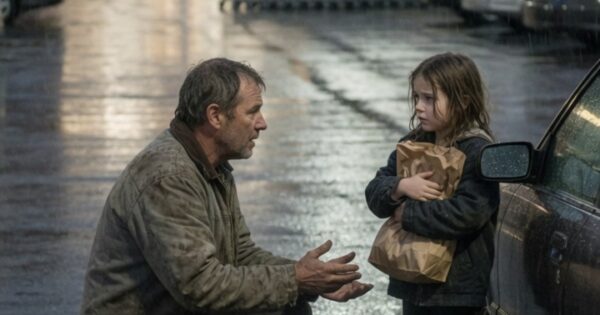
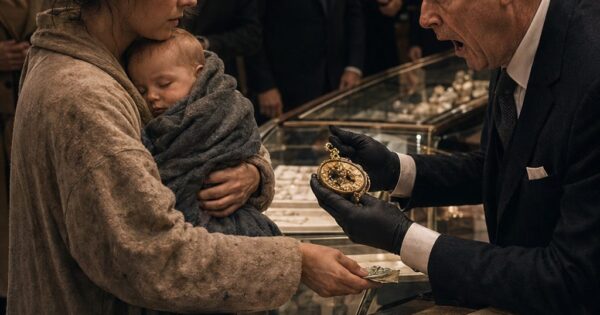
This Fort Campbell Incident begins with a shocking display of disrespect and intimidation in the Fort Campbell dining facility.
Table of Contents
Part 1: The Fort Campbell Incident Unfolds
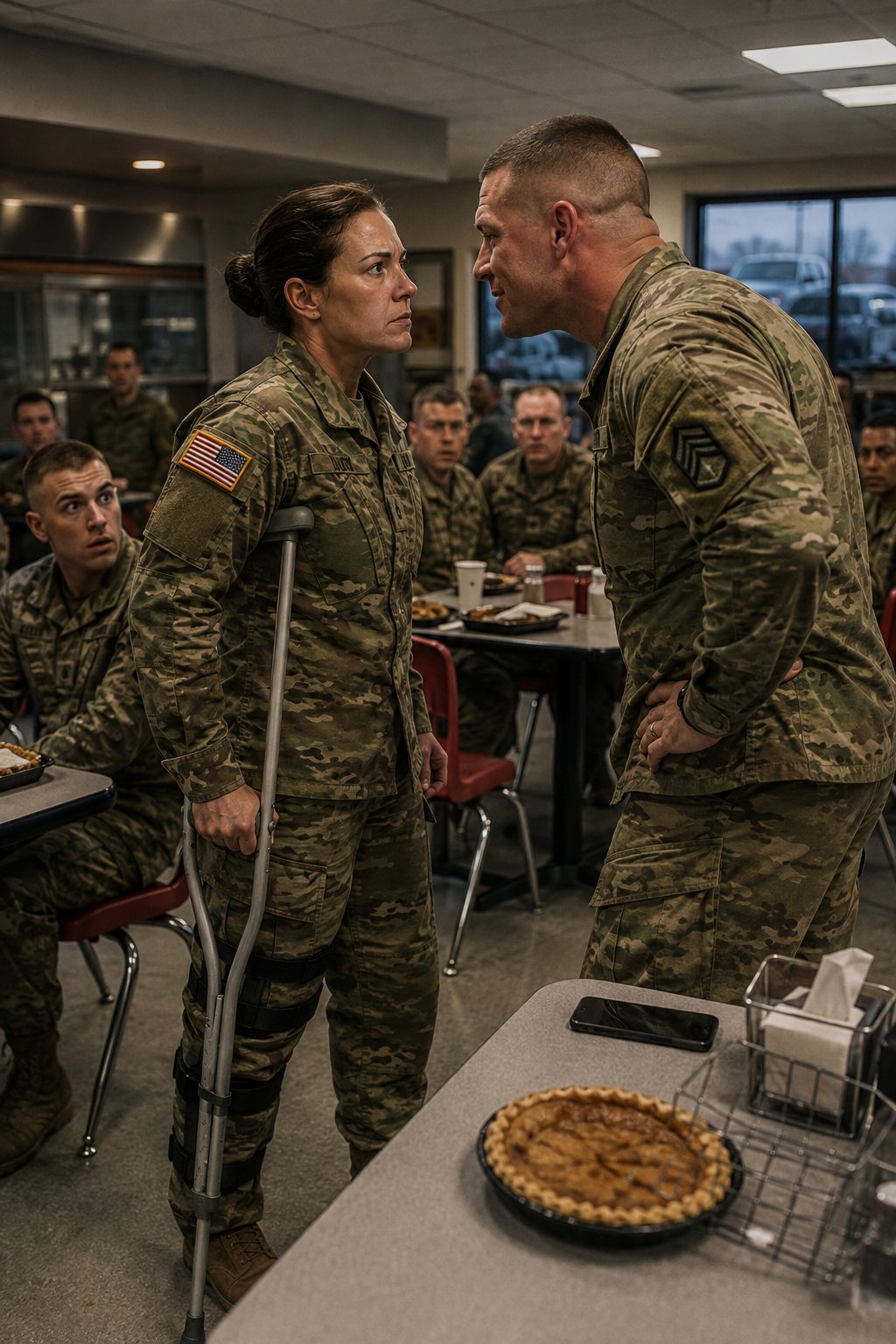
Army Lieutenant Natalie Carter, a soldier who had returned from Afghanistan with a damaged leg, was standing in the crowded dining facility, her hand wrapped around an aluminum crutch and the other pressed against the edge of a table for balance.
The dining facility was filled with the smell of burnt coffee, overcooked chicken, and industrial cleaner.
Sergeant Marcus Briggs, a respected but also feared soldier, approached Lieutenant Carter and told her to move her crutch, saying it was a «little display» that could cause someone to trip.
Lieutenant Carter recognized Briggs’ voice and knew he was trying to intimidate her.
She kept her voice level and told Briggs to step back, but he laughed softly and said he was just looking out for her.
The room fell silent as Briggs’ insult hung in the air, and nobody came to Lieutenant Carter’s defense.
A young private near the window whispered «don’t,» but he never looked up from his tray.
Briggs knew that Lieutenant Carter’s dark brace beneath her uniform pants was impossible to hide, and he also knew that she was careful with her movements due to her injury.
Despite this, Briggs stepped closer to Lieutenant Carter, his boot striking the crutch and sending it sliding across the tile floor.
Lieutenant Carter’s shoulder hit the table, and a coffee cup tipped over, spilling hot liquid across a tray.
Someone gasped, and Briggs raised his hands, saying it was an accident.
A civilian employee hurried around the counter, but Briggs blocked her view.
By the time Lieutenant Carter recovered her crutch, several phones had disappeared beneath tables, and one soldier had recorded a twelve-second video of the incident.
The video showed the crutch moving and Lieutenant Carter losing her balance, but it did not show Briggs looking toward the rear entrance seconds before it happened.
It also did not show the man standing near the drink station, who was wearing civilian clothes and never approached Lieutenant Carter.
The duty officer watched the video and folded his arms, saying that Sergeant Briggs claimed there was no intentional contact.
Lieutenant Carter said that Briggs had kicked her crutch, but the duty officer asked if she had proof.
Lieutenant Carter looked around the room, but nobody spoke up in her defense.
The private who had whispered earlier stared at the floor, and Briggs leaned against a chair, calm and smiling.
Lieutenant Carter’s fingers tightened around her crutch as she realized that nobody was going to stand up for her.
That was when she noticed a phone placed face down beside a stack of plastic trays near the pie display.
The civilian worker behind the counter caught her eye and gave her a small nod.
Lieutenant Carter said nothing, but she knew that she had found a potential ally.
That evening, Lieutenant Carter met the civilian worker, Denise Harper, outside the dining facility.
Denise handed Lieutenant Carter the phone and said, «I saw what happened.»
The recording on the phone lasted forty-seven seconds, and it changed everything.
Briggs had not acted alone, and the recording showed him looking toward the civilian near the drink station before kicking Lieutenant Carter’s crutch.
The recording also captured a conversation from earlier that morning, where a voice said, «Carter keeps asking questions about the housing contracts.»
Another voice replied, «Then make her look unstable.»
Lieutenant Carter watched the clip three times, and she knew that she had to take action.
She opened public property records and found that the company connected to the contractor had acquired land near Fort Campbell through deals approved after several families reported pressure, threats, and strange «accidents.»
Lieutenant Carter realized that the pattern was larger than one dining facility, and she knew that she had to expose the truth.
Part 2: The Final Truth Revealed
The next morning, Lieutenant Carter returned to the dining facility, wearing jeans and a gray sweatshirt, and carrying a folder with property records, photographs, contract approvals, and a printed transcript from the forty-seven-second recording.
Briggs was waiting for her, and he smiled when he saw her.
«You really want to keep this going?» he asked.
Lieutenant Carter placed the folder on the table and said, «I understand enough.»
Briggs leaned closer and said, «People who keep digging usually regret it.»
Outside the front windows, two black SUVs turned into the parking lot, their engines running.
Briggs followed Lieutenant Carter’s eyes and saw the SUVs.
The dining facility doors opened slowly, and cold Kentucky air moved across the tile floor.
Two uniformed officers entered, followed by two military investigators and a federal procurement official carrying a sealed evidence case.
The officer removed his cap and looked past Briggs, past the duty officer who had dismissed the incident, and then faced Lieutenant Carter.
«Good afternoon, Colonel Carter,» he said.
The room went silent, and a fork struck the floor.
Briggs stared at Lieutenant Carter, his face drained of color.
«You’re a lieutenant,» he said.
Lieutenant Carter smiled and said, «I was wearing lieutenant insignia during a temporary assignment.»
The officer stepped forward and said, «Colonel Natalie Carter serves as deputy commander of the Army Criminal Investigation task force overseeing federal contract fraud connected to military installations.»
The duty officer moved backward, and Briggs said nothing.
The officer continued, «Colonel Carter was assigned to review irregularities involving housing contracts and land acquisitions near Fort Campbell.»